Blog

  • Why Festivals Feel So Transformative

    Why Festivals Feel So Transformative

    My first festival completely changed my life.

    I went into Bonnaroo Music & Arts Festival excited to see some of my favorite artists with a couple of my friends. What I hadn’t realized is how much more this space would hold.

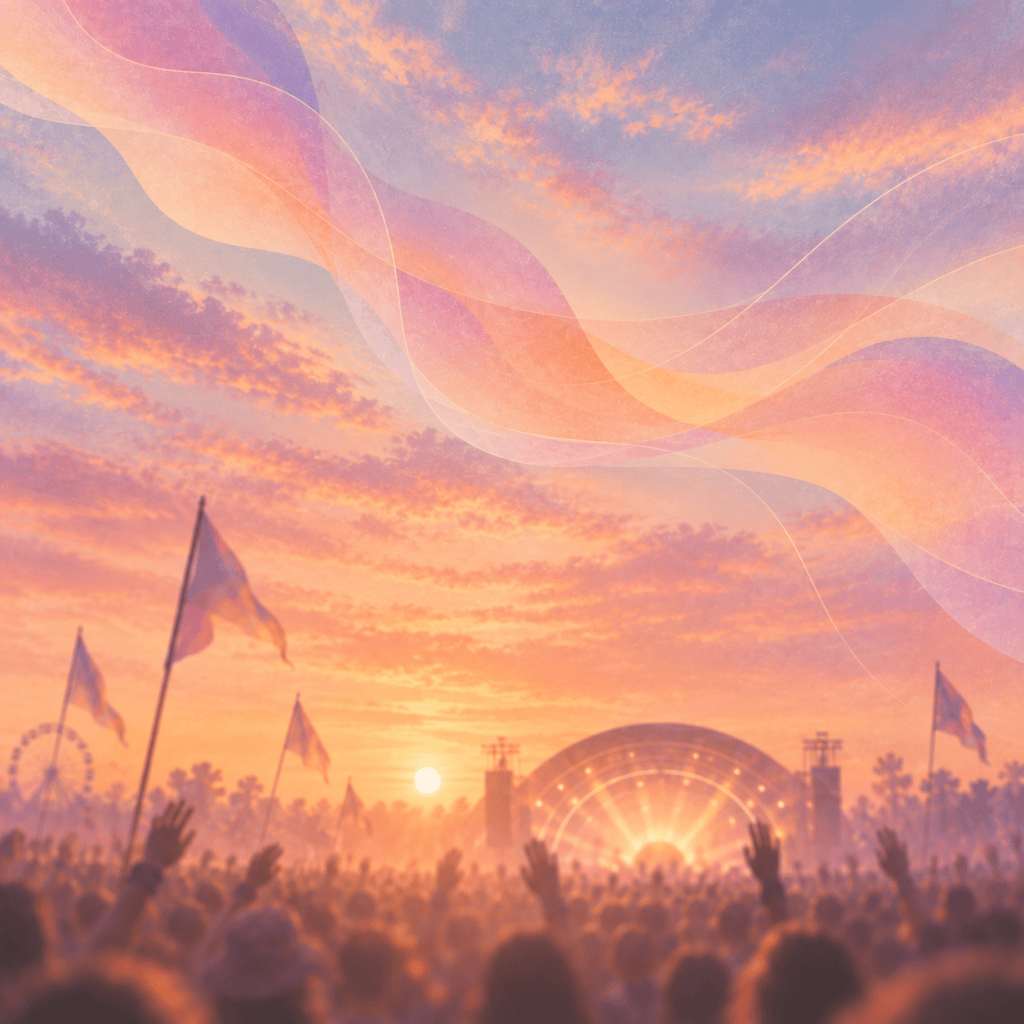
    The energy was palpable before we even arrived. We spent the drive down listening to the artists we were excited to see, imagining what the week ahead might hold. As we got closer to the Farm, we hit standstill traffic – the kind that would normally make anyone irritable and anxious. Except this wasn’t normal traffic. People were out of their cars blasting music, playing catch in the road, sharing drinks and laughs with strangers. Even in the nearly ten-hour line of cars waiting to get in, you could feel the energy building around us.

    This energy carried throughout the entire weekend as we danced from stage to stage beneath the lights and lasers, sang aloud to our favorite songs in a crowd of thousands, laughed until the sun came up, connected with strangers, and seemed to make friends around every corner.

    As the weekend unfolded, I felt myself opening. I had never been particularly comfortable with self-expression or felt completely accepted simply for being myself. At Bonnaroo, I was surrounded by people expressing themselves freely and being met with that same openness in return. I felt my soul expanding through the community, the connection, the radical acceptance, and the genuine love I experienced there. For the first time, I began to understand what it felt like to be unapologetically myself – and to love that version of myself unconditionally rather than hide it.

    Standing in the crowd feeling so deeply accepted, welcomed, and connected, I remember thinking, “I wish every day could be like this.”

    When we packed our cars on the last day, hot and exhausted, I could feel that something in me had shifted. Being immersed in that community for a week had opened my heart and changed the way I thought about the world around me. I didn’t want to leave that version of myself behind when I left the Farm. I wanted to find a way to carry it home.

    Bonnaroo is rooted in a core set of values that shape the culture of the festival. While they are laid out in what is known as the Bonnaroovian Code, the values behind them are reflected throughout festival culture more broadly, including play as a team, respect the farm, don’t be that person, stay true Roo, and perhaps the one most synonymous with Bonnaroo – radiate positivity.

    Radiating positivity encourages attendees to spread positive energy through smiles, kindness, openness, and “being awesome to one another.” The festival is built on this pillar of positivity, and you can truly feel its radiance throughout the Farm and in interactions with others. It sounds simple, but when tens of thousands of people enter a space with that shared expectation, it begins to shape the culture around them. I watched people continue to radiate that positivity through the heat, the traffic, the exhaustion, and all the little difficulties that come with spending days living in a field. Experiencing that kind of openness and positivity made me want to bring more of it into my everyday life.

    I carried those principles with me as I returned to my normal routines and began to notice the ways I was changing. I came home from that first Bonnaroo with a more positive outlook, a deeper desire for connection, a greater impulse to help the people around me, and a more open heart than I’d had in a long time. I felt softer. More inspired. More creative. More willing to express myself freely and extend that same acceptance to others.  

    I had gone to Bonnaroo expecting a week of music. I came home feeling transformed.

    So why do festivals feel so transformative?

    Humans have long sought experiences that move us beyond our ordinary ways of being, though the spaces in which we find them continue to evolve. One of the most compelling contemporary examples is the music festival – a gathering that, while framed as entertainment, often mirrors the structure and impact of ancient ritual and spiritual practice. Beneath the lights and sounds, festivals can become powerful spaces for connection, transformation, and expanded states of consciousness.

    Expanded states of consciousness, those that shift us from our ordinary patterns of awareness, can be accessed in a variety of ways. Traditional practices have often used rhythm, chanting, dance, music, movement, breathwork, and other forms of sensory immersion to shift ordinary awareness. These techniques can shift perception, disrupt habitual patterns, interrupt the ordinary mode of being, and allow for more expansive experiences of consciousness to emerge.

    Music festivals, by design, engage many of these same sensory pathways. With music, dancing, movement, and visual stimulation at their core, they naturally lend themselves to expanded states, creating conditions for transformation and transcendence. In this way, festivals can serve as a sort of catalyst, inviting participants to move beyond the mundane into a more expansive state of being.

    The immersive soundscapes and rhythmic patterns of live music, in combination with collective movement, can contribute to trance-like states in which the boundaries between self and others feel less distinct. Music has a unique capacity to stir memory, evoke emotion, and carry us into liminal spaces. When paired with dance and communal energy, music becomes an embodied, collective experience capable of shifting the way we experience ourselves and those around us.  

    At their heart, music festivals mirror many of the elements of ritual. Anthropologically, rituals are often characterized by structure, symbolism, and shared intention. They create a container in which transformation can occur, both individually and collectively.

    Music festivals follow a similar structure, with symbolic elements that emerge through themes, costumes, visual art, collective anticipation, and even the sacredness of the main stage at sunset. For a few days, they provide a space where ordinary routines and social roles are temporarily suspended, allowing participants to engage in more authentic or expressive versions of themselves.

    This temporary suspension of ordinary life echoes what anthropologist Victor Turner described as liminality, or a threshold state of being between worlds, where ordinary structures and identities become less fixed. Within this liminal space, people may become more open to new insights and ways of understanding themselves, relating to others, and imagining who they might become. Within the context of a festival, this liminal space can create room for emotional release, experimentation with identity, and experiences that challenge the boundaries of the ordinary self. When participants eventually re-enter everyday life, they may return with a renewed sense of self or purpose, or a different understanding of the world around them.

    One of the most profound forces of the festival experience is the energy of the crowd itself – the sense of unity that arises through shared emotional and physical expression. Sociologist Émile Durkheim referred to this phenomenon as collective effervescence, or the heightened sense of shared emotion and collective energy that can emerge when people gather and participate in communal experience.

    Here, at the festival, thousands of people enter this temporary world with a shared intention: to experience the music, dance, celebrate, connect, and step outside the routines of everyday life. We sing together, move together, laugh together, and experience our favorite music alongside thousands of other people doing the same. In these moments, we can become so immersed in the present and in one another that we experience the collective energy directly, transcending the boundaries of our individual selves as we connect to something bigger and more expansive.  

    The dancefloor becomes more than a space for movement; it becomes sacred ground. Strangers become mirrors. Voices sing together. The crowd breathes as one. These shared emotional peaks can lead to a dissolution of personal boundaries, giving rise to a profound sense of connection with the collective. This connection feels both intimate and infinite – a connection to the group, but also to something cosmic.

    Beyond these profound moments of collective effervescence, however, live the smaller moments that can leave just as lasting an impact. A stranger gives you directions to a stage. Someone gives you a sip of their water. You unexpectedly run into a friend. You wrap your arms around the people you love and sing your heart out to your favorite song. These moments remind us of our humanity – of the importance of being kind, compassionate, generous, and loving toward one another, both within the festival and beyond it.

    It is through both the profound and the seemingly ordinary that transformation unfolds. These experiences can shift something within us, planting seeds that continue to grow long after the lights go out and the music fades. As we carry them back into everyday life and begin to integrate what they have shown us, they can shape our perspectives, values, and the ways we relate to ourselves and others, fostering a heightened sense of empathy, a greater appreciation for community, or a deeper understanding of our own identity.

    The festival ends, but the experience continues to unfold within us.

    We return home more empathetic, more open, and in some ways, more ourselves. After my first Bonnaroo, I continued traveling around the country to festivals, each one opening me a little further and shaping the person I was becoming. No two festivals, or even two moments within a festival, have transformed me in quite the same way. Some of these experiences have been defined by profound moments of collective effervescence, while others have been marked by smaller moments of humanity and kindness. Together, they have continued to shape the way I relate to myself, to others, and the world long after the experience ends.

    In moments of collective participation, I have felt the boundaries of my Self dissolve, loosening the everyday separation between myself and those around me. Within that dissolution, I have experienced profound moments of spiritual expansion – moments when connection seems to extend beyond the people standing beside me and into something much greater. There is something cosmic about these experiences. For a moment, I experience the interconnectedness I believe exists beneath our ordinary sense of separation, not as an abstract spiritual idea, but as something I can actually feel. These experiences have shaped the way I understand consciousness and reality, expanding my sense of who I am and what I am connected to.

    Yet, it is often the smaller moments that stay with me just as deeply – a stranger giving me a trinket because they like my outfit, a friend giving me a sip of water when I am dehydrated and exhausted, holding my friends close during the last song of the night. Through these interactions, strangers become friends, and friends become family. These moments remind me of our humanity and how little it can take to make another person feel seen, cared for, or less alone.

    These moments, whether infinite or intimate, both point towards connection. One shows me what it feels like when boundaries between self and others dissolve through spiritual expansion; the other shows me what connection looks like when it takes human form: kindness, generosity, presence, and care. One reminds me that I am part of something far greater than myself; the other reminds me of my responsibility to the people with whom I share it.

    I have learned to carry both into the way that I live. Festivals have made me more open and accepting of myself and others, more authentic in the way I express myself, more aware of my spiritual nature, and more conscious of how deeply we need community and connection. The person I become within these spaces no longer feels separate from the person I am in everyday life. Rather, festivals have given me a space to discover and practice ways of being that I want to embody beyond them.

    At my first Bonnaroo, I remember thinking, “I wish every day could feel like this.” Now, I understand that every day doesn’t need to feel like a festival for me to live according to what festivals have taught me. I can choose openness. I can express myself freely and offer that same acceptance to others. I can look for opportunities to make someone feel seen or cared for. I can seek connection in the ordinary moments of my life and remember the deeper connection I have experienced in the extraordinary ones.

    Every festival has shaped me differently, but the transformation has never ended when the music does. I carry who I become there home with me.

    A Thread to Follow

    Have you ever left a music festival feeling different from the person who arrived? What changed within you, and what stayed with you after you returned home?

    If festivals aren’t your space, have you ever had an experience or entered a space that transformed you in a similar way?

    If an experience came to mind while reading, I’d love to hear about it. What did you carry home with you? Feel free to share your own thread below!

    Until next time ✨
  • The Moments That Feel More Real Than Reality

    The Moments That Feel More Real Than Reality

    There are moments when the world seems to shift.

    I remember standing in the middle of Bonnaroo, surrounded by tens of thousands of strangers, an artist I loved providing the soundtrack to the moment. Lights flashed across the crowd and confetti fell from the sky. I don’t remember exactly what song was playing, or even when it happened, but somewhere in the middle of it, something changed.  

    I felt myself expanding to include the people around me, the artist, and the stage itself. It felt as though the stage reached out and physically wrapped me in a hug. For a moment, I was no longer just me – I was everything and everyone around me. Time seemed to stand still as I was engulfed in this overwhelming sense of oneness. Something in me shifted as I understood that this was what reality was supposed to feel like.

    I’ve encountered that feeling again in completely different moments – the first time I held my son in my arms, while standing wrapped around my best friends at a festival, even in quieter moments of solitude during meditation. Some are vast, some almost impossibly small, but each has carried that same sense of recognition that this is real.

    What does it mean for a moment to feel more real than reality itself?

    Most of the time, we experience reality within familiar boundaries. We move through time from past to present to future, remembering what has already happened while anticipating what might come next. We experience ourselves as separate individuals, occupying one body, one perspective, and one place in the world. Our awareness moves constantly between the world around us and the thoughts, memories, plans, and emotions moving within us.  

    But sometimes we encounter moments that seem to stretch beyond those boundaries. Time can slow down, speed up, or disappear entirely. The separation between ourselves and the world around us can feel less distinct. Our usual stream of thought grows quiet, and for a moment, we become completely immersed in the experience unfolding around us.

    There is something profound about stretching beyond the familiar boundaries of ordinary experience. These moments can feel unusually immediate, meaningful, and complete, as though there is less distance between ourselves and the moment we are living. Somehow, they can feel more real than ordinary reality.

    What is it about certain moments that makes them feel so profoundly real? Why do some stay with us long after they end, shifting the way we understand ourselves, our relationships, or the world around us?

    There are different ways of understanding what happens to us in moments like these. From the perspective of consciousness research, some can be understood as shifts away from our ordinary state of awareness. Our everyday waking experience is often described as an ordinary state of consciousness. Yet consciousness encompasses a much wider realm of experience, in which perception, awareness, emotion, sense of self, and even our experience of time and space can shift in profound ways. These shifts can give rise to experiences described as altered or non-ordinary states of consciousness.  

    I find myself drawn to another word: expansive. Not every altered or non-ordinary state necessarily feels expansive, but for the experiences I’m interested in here, the word captures something that the others don’t. These moments can feel like an opening – a portal into something beyond the familiar boundaries of ordinary awareness, where our experience of ourselves and the world begins to expand.

    Expansive states of consciousness can emerge through many different pathways. For example, psychedelics can profoundly alter perception and awareness, but shifts in consciousness can also arise through meditation, breathwork, sensory deprivation, prayer, chanting, rhythmic drumming, dancing, music, and movement. Some are intentionally cultivated, while others find us unexpectedly.

    The human impulse to shift consciousness stretches across cultures and throughout history. People have long used ritual, contemplative practice, psychoactive substances, and other methods in pursuit of healing, transformation, connection, and experiences of the divine.

    But the moments I’m interested in aren’t limited to experiences we deliberately seek or states we intentionally induce. Sometimes they arrive without warning, in circumstances that look entirely ordinary from the outside. A piece of music. The birth of a child. A moment of deep connection with another person. Standing beneath a night sky and suddenly feeling impossibly small and infinitely connected at the same time.

    However we arrive there, these moments can open us to something beyond our ordinary experience of ourselves and the world.  

    The circumstances surrounding these moments can be entirely different. I’ve experienced them surrounded by thousands of people and completely alone, with deafening music and in silence, in the overwhelming magnitude of holding my son for the first time and while simply sitting outside, watching the trees dance in the breeze.

    Across all of these experiences, the common thread isn’t necessarily what’s happening around me, but what seems to happen within me. The details change, but the feeling remains familiar. The noise in my mind quiets. Time stands still. I feel intensely present and deeply alive. The boundaries I ordinarily experience between myself, other people, and the world around me seem to dissolve, leaving behind a deep sense of connection.

    I become acutely aware of my humanness, yet at the same time feel myself stretching beyond it. I feel connected to my own Self, to this vessel that my soul resides in, to the emotions moving through me, to those I love, and beyond them, to something vast and universal. In these moments, I am not escaping who I am, but rather expanding into the fullness of what I already am. It is as though I can feel my soul expand and touch the surface of something much deeper.

    Alongside this feeling of expansion, I often experience a deeper kind of knowing – a sense that I am encountering something I already understand, even if I cannot explain how I know it.

    William James described this characteristic of mystical experiences as their noetic quality – the sense that they carry insight or knowledge that reaches beyond ordinary intellectual understanding. This idea has always resonated with me because these moments do not feel like conclusions I have reached by thinking my way toward them. For a moment, I feel as though I can experience these truths directly.

    For me, that knowing feels more like remembering. The insights they bring rarely feel entirely new, but more like truths I have always known somewhere beneath the surface but have somehow forgotten in the noise of everyday life.

    One of the most powerful things I remember in these moments is connection. The separation between myself and the world around me no longer feels quite so distinct. I don’t feel as though I am learning that I am connected to the world around me; I feel as though I am remembering that I always have been.

    The sense of remembering is part of what makes these moments feel so deeply real to me. For a moment, the noise of everyday life quiets, along with the automatic patterns, anxieties, expectations, and identities that so often shape the way I experience myself and the world. Even the boundaries that ordinarily feel so fundamental to my experience can become less absolute. Beneath all of that, I feel closer to my own true Self and more aware that I am part of something much greater than myself. I feel expansive, limitless, and deeply connected to the world around me.

    In this way, these experiences have shaped the way I understand human potential. Our ordinary experience may only reveal part of who we are. In these moments, I experience myself as both deeply human and somehow more expansive than the limitations that usually define my experience of being human. They remind me that we may carry far more possibility within us than we realize – that we may be far less limited than we have learned to believe.

    What else might exist within us that we have yet to access? What becomes possible when we loosen our attachment to the identities and patterns that tell us who we are supposed to be, and begin to question the limitations that ordinarily define our experience?

    The challenge comes when the moment ends.

    I fall victim to this often. After experiencing something that makes me feel so alive, connected, and completely present, I want to find my way back to it. I begin looking forward to the next festival, the next experience, the next moment when everything might open up again.

    The problem, at least for me, comes when I begin living in anticipation of them. When these moments become isolated points on the horizon that I am constantly moving toward, everything in between can begin to feel like a waiting room for the moments when I feel most alive.

    I have noticed how easily anticipation can turn into anxiety or expectation. I can build an experience up in my mind, imagining how it will feel or hoping to recreate something I have experienced before. Then, when the moment finally arrives, I am so aware of what I want it to be that I am no longer fully present for what it actually is. Even when another beautiful moment comes, it doesn’t always fill me in the same way.

    The experiences that have taught me the most about presence can become the very experiences that pull me out of the present when I spend my everyday life waiting for them to return.

    Recognizing this doesn’t make me want to stop seeking these moments. I still want the festivals, the music, the awe, the experiences that shake me out of myself and remind me how deeply I love being alive. The lesson, for me, is learning not to make those moments responsible for giving my life meaning.

    The question becomes how to bring something from those moments back with us.

    The feeling itself may be fleeting, but through integration, what the experience reveals does not have to disappear when the moment ends. We can carry the insights from these experiences into our everyday lives, allowing what we felt, saw, or understood within them to shape the way we live afterward.

    Of course, integration isn’t always easy. There is a difference between experiencing connection in a moment when the boundaries of Self seem to dissolve and remembering that connection while moving through the routines, anxieties, and responsibilities of everyday life. It is one thing to feel completely present while standing beneath a sky full of confetti or holding someone you love; it is another to find moments of that presence while making breakfast or answering emails.

    This is where the possibility for transformation begins: not in recreating the intensity of the original experience, but in allowing what it showed us to become part of how we live. If a moment reminds me how deeply connected I am to the people around me, I can choose to carry more of that connection into my relationships. If it reminds me how incredible it feels to be completely alive and present, I can pay closer attention to the ordinary moments I might otherwise move through on autopilot. If I experience myself beyond the identities and expectations that ordinarily shape who I believe myself to be, I can begin to question how completely I allow them to define me.

    Even when the feeling fades, the memory remains. I may not be able to hold onto the expansiveness of these moments forever, but I can remember what they allowed me to see. As I continue to encounter these experiences and integrate what I learn from them, I can see the subtle ways they begin to unfold in my everyday life too.

    Living in alignment with my soul isn’t about trying to remain in an expanded state. It means allowing these moments to remind me of what I can so easily forget in ordinary life – the connection I feel, the presence I experience, the deeper sense of Self I encounter – and carrying those rememberings into the life I already have.

    These moments aren’t about escaping reality, but rather expanding it.

    They allow us to step outside the automatic patterns of everyday awareness and glimpse something more true, more whole. For a moment, we experience what life can feel like when our usual ways of understanding ourselves and the world loosen their hold, allowing us to simply be in it.

    These moments may look different for everyone. Some arrive with overwhelming magnitude, while others are so quiet we could almost miss them. They may find us through music, love, loss, meditation, awe, or in the middle of an otherwise ordinary day. What makes them meaningful isn’t necessarily how extraordinary they appear from the outside, but the way they shift something within us.

    I used to think the moments that felt more real than reality were meaningful because, for a brief period of time, I had somehow stepped outside of ordinary life. I am beginning to see them instead as moments when I was more fully present within life itself.  

    The feeling will eventually fade. Time begins moving again. The music ends, the confetti settles, we put our feet back on the ground and return to the lives we were already living. Yet something from the experience can remain – a memory, an insight, a sense of connection, a remembering of what it felt like to be completely alive.

    I am learning not to spend my life searching for the next moment that feels more real than reality, but to allow the ones I have experienced to teach me how to become more present within the reality I am already living.

    A Thread to Follow…

    Can you remember a moment that somehow felt more real than reality? What made it different? What, if anything, stayed with you after the moment passed?

    If a moment came to mind while reading, I’d love to hear about it. Feel free to share your own thread below.

    Until next time ✨

  • Where the Threads Begin

    Where the Threads Begin

    Hi friends! ✨ I am so happy that you are here to join me as I explore consciousness, the nature of Self, and some of the bigger questions about what it means to be human. It feels fitting to begin with the question that brought me here in the first place.  

    For most of my life, I have struggled with the simple question of who am I?

    We answer this question every day, often without giving it much thought. We give our names, our jobs, our roles, our hobbies and interests. We describe our personalities, our values, the things we love and the things we believe. We collect these pieces of ourselves and weave them together into an identity, a story of who we believe ourselves to be.

    But when I really sit with the question, these answers never seem like enough. They describe pieces of who I am, but something still feels unanswered. Who am I underneath it all?

    The deeper I look, the more tangled the question becomes, like roots twisting beneath the surface. We are complex, often contradictory beings, shaped by our experiences, relationships, environments, and the expectations placed upon us. With so many facets of who we are, it is hard to construct a coherent sense of self. When those pieces don’t seem to fit neatly together, it is easy to feel lost within them. And without a clear sense of who we are, it is easy to feel untethered – not only from ourselves but from the lives we are trying to create.  

    For me, identity and belonging have always felt deeply intertwined. I have often felt like I didn’t quite know who I was or where I fit. I felt lost, searching for some sense of who I was supposed to be. I learned to shape myself around expectations, showcasing the parts that aligned with who I thought I was supposed to be while suppressing the aspects that didn’t. I wanted to be somebody, to belong. But where did I fit when the pieces of me didn’t seem to fit together?

    I am a mother, learning to see the world through a child’s eyes. I am a partner who just wants to be loved. I am a student drawn to the mysteries of consciousness and psychedelics. I am a festival-goer who finds freedom dancing in a field with friends and strangers. I am a traveler, excited by new places and new adventures. I am the bar regular, playing trivia with a pitcher of Bud Light and the bookworm cozied up with a psychological thriller. I’m a planner, but I’m cluttered. I love people, but I’m shy. I’m a daughter, a sister, a cousin, a friend.

    I am so many things. I hold so many different versions of myself. For much of my life, I struggled to integrate these seemingly contradictory parts into a coherent whole. How could all of these belong to the same person?

    Surely, I couldn’t be the kind of caring, present mother I wanted to be while also being fascinated by psychedelic drugs and altered states of consciousness. I couldn’t feel overwhelmed by social anxiety in the grocery store and somehow feel completely at home surrounded by thousands of people at a music festival. Somewhere among all these contradictions, I thought there had to be one version that was the real me.

    Psychology and sociology offer different ways of understanding how these versions of self come to exist. Our identities are shaped by our beliefs and values, our patterns of thought and behavior, our memories and experiences. They are also formed in relationship with other people and the world around us; through culture, social roles, norms, expectations, and the groups to which we belong. From these perspectives, the self is something we develop, construct, and continually reshape as we move through life. And I think there is something deeply valuable in understanding ourselves this way. These pieces tell the story of how we became who we are.

    But beneath these layers of identity, I have always sensed a deeper presence – a core sense of being that feels more fundamentally me. Understanding how my identity was shaped helped me make sense of the person I had become, but I still wanted to understand the self experiencing it all.

    That search has led me inward, into the depths of my own being. If I stripped away the roles, interests, traits, and stories I had used to define myself, what would be left? Am I simply the little voice inside my head? And if that voice fades into silence, what remains?

    In the stillness, I find myself returning to awareness.

    Beneath the constant stream of thoughts, identities, emotions, and experiences is the awareness that notices them. I can observe my thoughts without being the thoughts themselves. I can move through different roles without any one of them defining me completely. Even my understanding of myself can change while there remains something within me that is aware of that change.

    I no longer need to determine which version is the “real” me. They are all real expressions of my experience, but no single one represents the whole of who I am. The mother, the student, the festival-goer, the friend – each is a part of me, a different expression of the same awareness moving through this life.

    Through my own journey, I have come to understand the awareness that remains through all these changing versions of myself as my true Self – the deepest sense of who I am beyond the identities I have constructed throughout my life. For me, that Self is consciousness itself.

    This is where consciousness becomes the thread that ties the pieces together. I believe consciousness extends beyond the boundaries of our individual minds – something universal, woven into the very fabric of existence and inseparable from the universe itself. Each of us experiences that consciousness through our own perspective, shaped by our lives, relationships, thoughts, bodies, and experiences. In this sense, I have come to think of my Self as the universe experiencing itself through the unique lens of my existence.

    My experience is entirely my own, yet the consciousness experiencing it is connected to something far greater than me. And if consciousness is fundamental to the universe itself, then we may be far less separate than we understand ourselves to be. If we are each expressions of the same universal consciousness, then we are intrinsically interconnected – separate in our individual experiences yet connected by something deeper that exists within us all.

    To me, there is something incredibly powerful in that possibility. Beneath everything that makes us different, is a fundamental connection that we share. And I believe that connection speaks not only to what we share, but to what we carry within us. If our consciousness is part of something as vast and limitless as the universe itself, I believe we carry some of that potential within us, too. We may hold depths of possibility that extend far beyond the identities and limitations we have learned to place around who we are.

    For me, this perspective has changed the way I understand myself. Beyond that, it has changed the way I understand my place in the world. There is freedom in knowing I don’t have to fit myself into one definition of who I am. I can change, contradict myself, outgrow old versions of who I have been, and discover new ones without losing the deeper sense of Self beneath them.

    The pieces of me no longer have to fit perfectly together. I can be a mother and a researcher, spiritual and scientific, shy yet deeply drawn to connection. I can dance in a field one weekend and spend the next curled up with a book. None of these versions makes the others less real.

    Looking back, I think this is what I was searching for all along. I spent so much time trying to become somebody because I thought having a clear identity would finally give me a sense of belonging. But I no longer think belonging depends on finding the one place where all of me seems to fit. I can belong within the fullness of who I am while also knowing that I am part of something much greater than myself. Through consciousness, I have found a sense of connection – to myself, to others, and to the universe – that makes me feel a little less untethered in this life.  

    And that is where Threads of Consciousness begins.

    I created this space because I want somewhere to keep asking these questions. Somewhere I can explore consciousness through psychology and science without losing the spirituality, curiosity, and lived experience that make these questions meaningful to me in the first place.

    There is so much I still want to understand. Altered states and psychedelics, music and festivals, awe and connection, healing and transformation – these are some of the threads that continue to draw me deeper into questions of consciousness. I want to explore the experiences that shift our perspective, challenge our understanding of reality, or connect us to something beyond ourselves, and what they might reveal about who we are and the potential we hold within us.  

    Threads of Consciousness is a place for all of those questions to coexist. A place to explore what we know, what we believe, what we experience, and everything we still don’t understand. More than anything, I hope it gives you a space to ask your own questions, look a little deeper, and consider what consciousness means to you.

    A Thread to Follow…

    Before you go, I’ll leave you with a question to sit with:

    Who am I beyond my interests, roles, and labels? If I stripped away everything I’ve used to define myself, what remains?

    You don’t have to find an answer. Just give yourself the space to sit with the question and notice what comes up. And if you feel called to share, I’d love to hear your thoughts in the comments.

    Until next time ✨